
The Composition of Judiciary Councils: Between International Standards and National Discrepancies
Over the past two years, Judiciary Councils have been subject to reform across Europe. The reasons for these normative interventions differ, but their effects on judicial systems are not irrelevant. Judiciary Councils are, indeed, considered, even with all their defects, as fundamental elements to guarantee the external independence of the judiciary, protecting the judiciary against external influences of a political nature and enhancing the efficient administration of justice. Judiciary Councils are an expression of the Mediterranean European tradition model of judicial self-government, according to which most of the decisions concerning the organisation of judicial offices, the careers of judges and disciplinary issues are taken by this organ. International bodies recognise that there is no single standard model for establishing a Judiciary Council, provided that “its composition is such as to guarantee its independence and to enable it to carry out its functions effectively”. Thus, they offer some recommendations on how such bodies should be composed.
Generally, a mixed composition is recommended. That means that when determining how the members of the body are to be selected, states should find an adequate balance between judicial members and lay members (not judges). According to the Venice Commission and the Consultative Council of European Judges, at least half of the members should be judges elected by their peers and judicial members should not be elected by parliament or appointed by the executive. The mixed composition of the organ is usually advised to avoid the perception of the organ as a corporatist one, to take advantage of diverse viewpoints within the body, ensure a diverse representation of society and provide an additional source of legitimacy. However, the involvement of the other branches of government must not threaten or place undue pressure on the members of the Council or on the entire judiciary.
The issue of interference arising from the composition of the Council is the common thread running through all the reforms. In this short piece, two cases will be examined: the Spanish and the Italian cases. Both are still in progress but show two opposing trends. In the former, the ruling majority seems to be moving towards overcoming the historical politicisation of the judiciary’s self-governing body. In the latter, instead, under the pretext of freeing the Council from the influence of judicial associations, the reform could end up reducing judicial independence and affecting the separation of powers.
Spain
The issue concerning the politicisation of the Spanish General Council of the Judiciary (GCJ) is long-standing. Art 122.3 of the Spanish Constitution states that the GCJ shall consist of the President of the Supreme Court and of: “twenty members appointed by the King for a five-year period, of which twelve shall be judges and magistrates of all judicial categories, under the terms provided for by the organic act; four nominated by the Congress and four by the Senate, elected in both cases by three-fifths of their members amongst lawyers and other jurists of acknowledged competence with more than fifteen years of professional practice”. The constitution thus prescribes a mixed composition with a majority of the judicial members. However, a 1985 Organic Law altered the existing system, relocating the power to elect the twelve judicial members from the judges to Parliament with a three-fifths majority, on the idea that the independence of the judiciary would be better protected through the intervention of Parliament. The constitutionality of the law was challenged, but the Constitutional Tribunal deemed that this choice was not against the Constitution. Nonetheless, it signalled that a risk of politicisation could have arisen if the parliamentary appointments were made by the distribution of political quotas among the political forces.
Despite the changes in the appointment procedures, which tried to involve the judges in the selection of candidates, the reforms, maintaining the last word on the selection with Parliament, were not able to reduce either the deeply politicised nature of the body or foster the effective guaranteeing of the independence of the judiciary. After some failed attempts to reform the system and a political deadlock that since 2018 impeded the renewal of the members, provoking the prorogation of the existing CGJ, a 2024 political agreement managed to solve the impasse, renewing the organ and proposing the introduction of a new law on the selection of the CGJ judicial members. The draft, which reflected the demands of European institutions to reform the law, entrusted the renewed CGJ to propose a reform of the judicial components in line with the highest European standards. Failing to approve a single proposal, the CGJ wrote two different proposals that were sent to the Venice Commission for an opinion, which was released in October 2025.
The Commission analysed the two drafts, which differ mainly on whether or not Parliament should be involved in the election of the judicial members. The first provides that judicial candidates should be endorsed by 25 judges or a judicial association, and that judges directly elect the GCJ members from among these candidates. The second proposes the endorsement by 30 judges or a judicial association, followed by a pre-election by the judiciary to create a shortlist, and the final election from this pool by Parliament. The Commission deemed the first option in line with European standards, although suggesting revising some elements in the peer-election system to avoid the possible internal politicisation. The second option, instead, was considered not in conformity with the European standards, mainly because it fails to solve the issue of the politicisation of the organ: the pre-selection of judges appears indeed insufficient to meet the peer-election standard, for Parliament, with its discretion, would still be the one effectively determining the final appointments. This option also leaves open the risk of new deadlocks among the political forces. Considering the indications from the Commission, the choice is now with the Spanish Parliament, which has to decide whether to return the power of selection directly to the judges or maintain an albeit mediated parliamentary control.
Italy
The Italian High Council of the Judiciary (HCJ) is deemed to be the first of its kind and a model globally exported. The HCJ for its composition (2/3 elected by magistrates, 1/3 by the Parliament in joint session from among full professors of law and lawyers with fifteen years of practice, the President of the Republic, the first president and the general prosecutor of the Court of Cassation) and the constitutional prerogatives has been deemed as one of the strongest Judiciary Councils, successfully guaranteeing the external independence of the organ. However, some recent scandals, linked to the supposed strength of the judiciary associations, may suggest that internal independence is still in the making. With the alleged aim to tackle this issue and to separate the careers of the judges and the prosecutors (felt by the government as too close, impeding the taking of the necessary steps to effectively deliver justice), the government is on the verge of enforcing a constitutional reform (approved as drafted by the government, with the rejection of all the amendments proposed in the parliamentary debates, and now submitted for a referendum) that could deeply impact judicial independence and the separation of powers. The reform concerns three main controversial points (the duplication of the HCJ, the sortition of its members, and the establishment of a High Disciplinary Court), but here, only the issue of sortition will be briefly analysed.
The reform indeed provides for changing the selection of the members, passing from an election to a sortition, which will, however, be different between lay and judicial members. The text indicates indeed that, excluding the ex officio members, the “other members are selected at random, one third from a list of university professors full professors of law at universities and lawyers with at least fifteen years of practice, whom Parliament in joint session, within six months of taking office, elects, and two-thirds, respectively, from among judges and prosecutors, in the number and according to the procedures provided for by law ”. If the judicial members are selected by sortition among all judges, the lay members would nevertheless remain subject to political influence. The lay members would indeed be sorted from a list drafted by the Parliament in joint session. This means that, while the judges would lose the ability to choose the members deemed more adequate to represent them within their organ of self-governance, the Parliament would still maintain the grip on a short list of names among which their members would be extracted. If objectivity and impartiality are the aims, the different sortition appears questionable. Moreover, since the method and the number of components would be indicated in a law to be adopted, there is still uncertainty as to how this would actually take place.
If we analyse this reform through the lens of the Venice Commission, some doubts about the conformity with European standards could be raised. First of all, the reform breaches the principle according to which the judiciary components should be elected in a free, direct, pluralistic and fair manner by the judges. Secondly, the sortition could undermine the necessary professional expertise required of members for the effective exercise of the functions of the Judiciary Councils, thus compromising the activity of the organ, in cases where, for instance, the person drawn may be a novice judge or, for other reasons, may not possess the necessary qualities. Thirdly, a pure sortition of the members would also compromise the pluralism that should be present in the body, since a random selection could not guarantee a balanced participation of judges from all levels of the judiciary, as well as adequate diversity in terms of specialisation, gender, and region, for everyone could abstractly belong to the same category.
Despite the Commission recognising the danger of judicial corporativism, the sortition prescribed by the reform, together with its other aspects, raises questions about whether its scope would instead bring about a weakening of the independence of the judiciary. Since separation seems to be the byword (splitting the HCJ, dividing the careers, separating the judges from their representatives, isolating the disciplinary function), doubts arise, given the aversion that the government daily shows against the magistrates, that the objective is perhaps to make the judiciary body less cohesive, more divided and thus more easily tameable. Solutions to the influence of judicial associations could perhaps have been found by following the Commission’s suggestions, and implemented through ordinary legislation, avoiding altering the constitutional architecture, with the risk of compromising a principle, judiciary independence, that is not “a privilege of judges, but an essential element of the separation of powers and a guarantee of the rights of parties to a fair trial ”.
About the Author
Ferdinando La Placa is a Doctoral Researcher in Law at the University of Turku in cotutele with the University of Palermo.
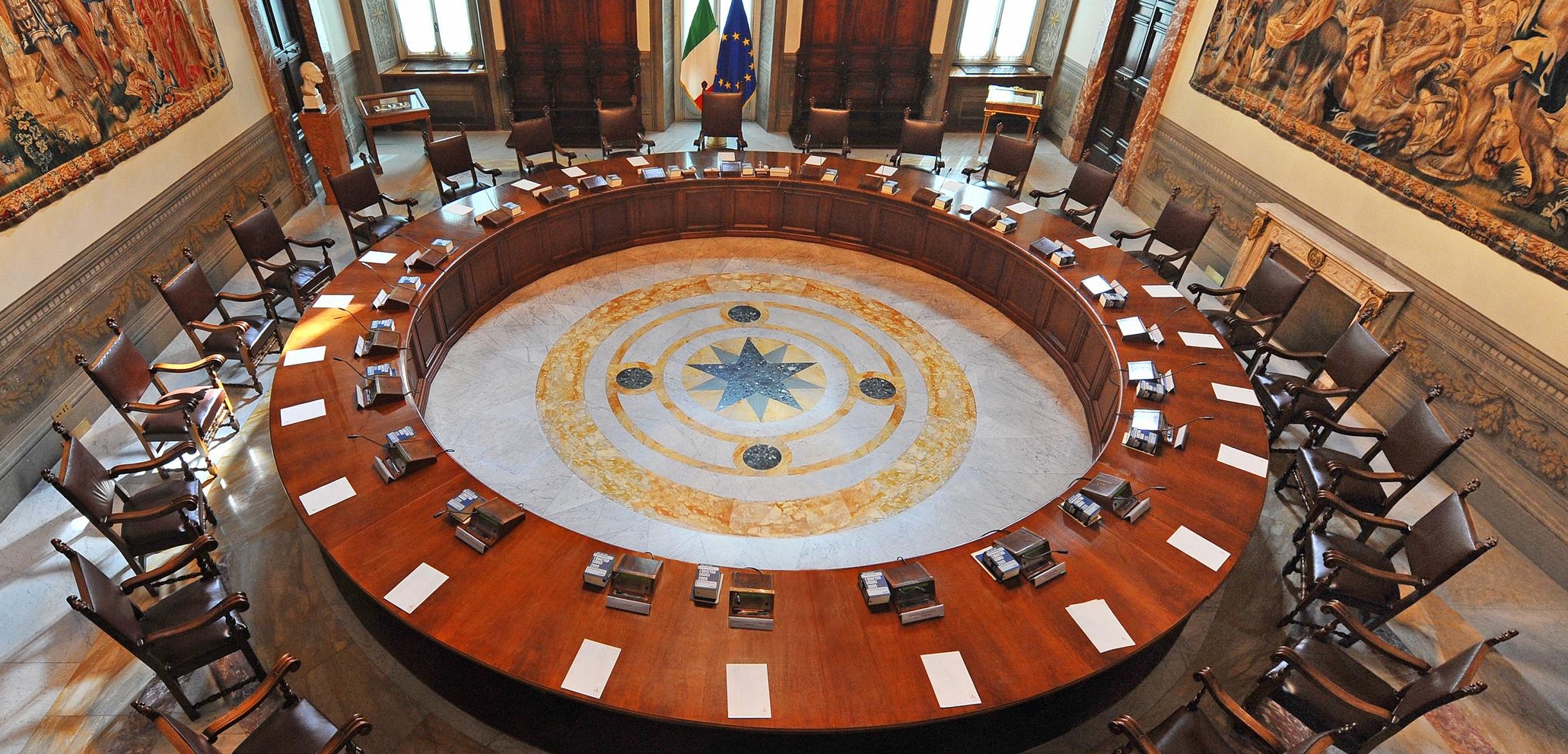
Heading image: Governo Italiano – Presidenza del Consiglio dei Ministri (Note legali), CC BY 4.0 via Wikimedia Commons. https://creativecommons.org/licenses/by/4.0.