Vernissage: Re-framing Justice Through Art
Law lessons typically involve a mundane, text-heavy approach to understanding legal issues. However, a unique course titled “Law & Art” seeks to change this narrative. Students have embraced a new way of learning law through the creative lens of art. The results? An unforgettable art exhibition.
What was the course about?
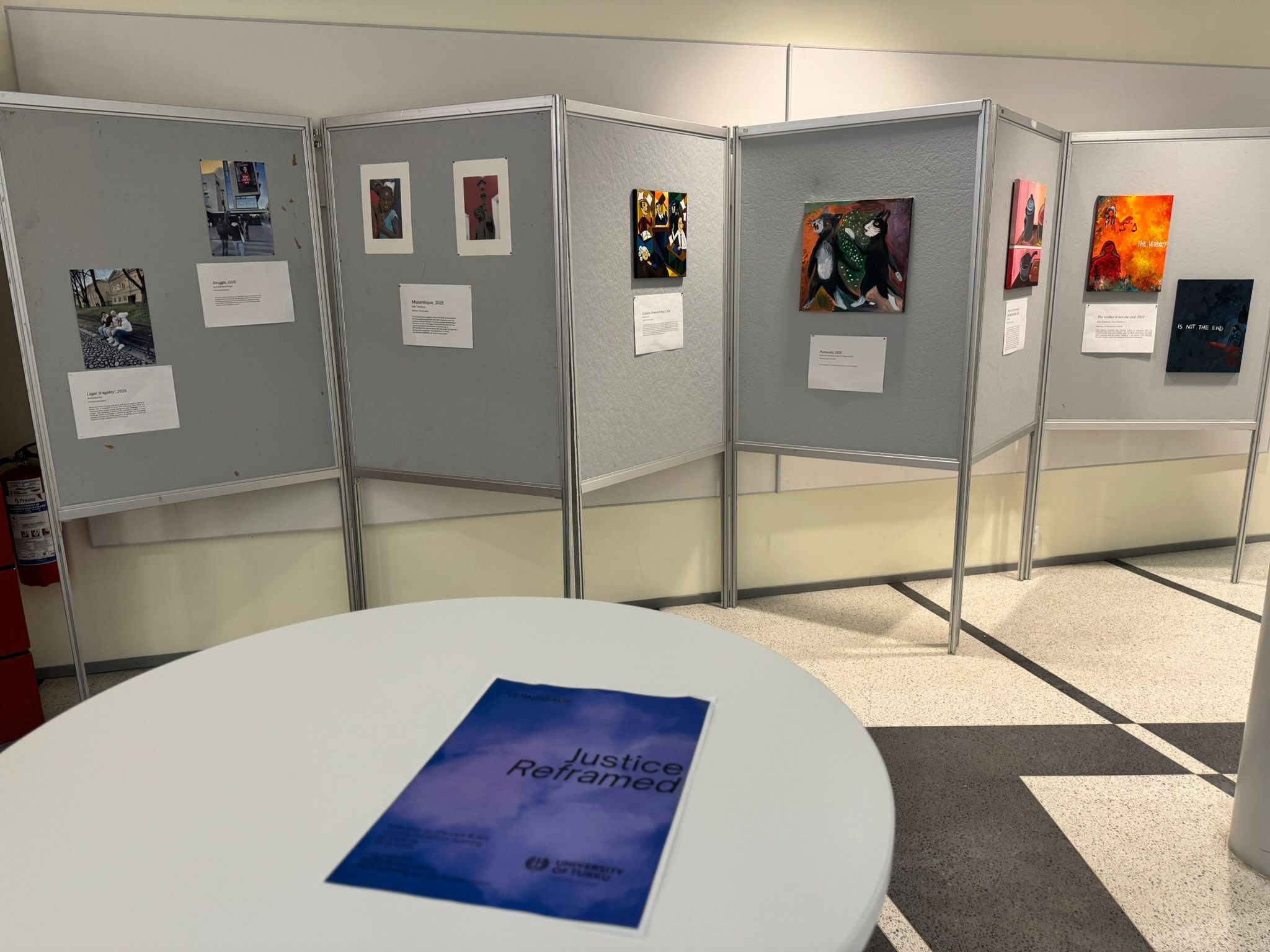
The Law & Art course once again transported students outside traditional classroom dynamics. During each week of the course, students were encouraged to use their imagination to highlight legal and social issues through unexpected means. For example, one session tasked students with making a game that centred around data privacy. Each session was unique and showcased different artistic methods as ways in which students could express their views on social norms, customs, laws, et cetera. This was incredibly useful as at the end of the course, all students were required to create an art piece, in any format, that addressed a current legal issue. An exhibition was set up to display the students’ artistic endeavours, drawing in people from different disciplines, countries, and academic levels.
This year’s theme was ‘Justice Reframed’ – a title selected by the students themselves.
How did the exhibition unfold?
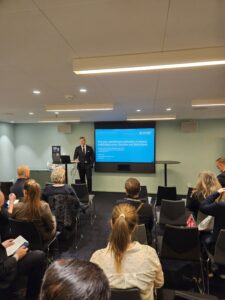
The exhibition began with a panel discussion about the course, hosted by Doctoral Researcher Jasmin Hannonen, and included four students from different backgrounds: Jimmy from Taiwan, Monica from Finland, Sara from Italy, and Stephanie from France. Different. Creative. Empowering. These were some of the words used to describe the students’ experiences of the course.

The course and exhibition attracted various law students, such as Anca from Romania. She expressed her satisfaction with finally discovering the complete collection of works created by her classmates. She also highlighted the installation’s added value in bringing together artworks with common themes: animals, the environment, and women. She noted that she was pleasantly surprised by the size and variety of the audience. Most importantly, she was glad that the visitors were analysing and actively putting in the effort to understand the artworks rather than merely passing by.
Example of the theme: Animals

This painting explores the notions of ownership of animals as objects and, therefore, subject to the control of humans.
Example of the theme: Environment

This painting highlights the pressing need to address climate change, presenting the perspective that the “West” is among the largest contributors to the climate crisis yet the least affected by it.
Example of the theme: Women

This interactive installation asked visitors to paint anywhere on the silhouette of a woman. It was an illustration of the objectification of women’s bodies.
The course also attracted students from other fields. Tim, a physics student from Germany, chose to study the course out of idle curiosity: “I think critical discussion of physics is underrepresented. We’re too convinced of being right, when in fact science should be questioned and critiqued.” The course, according to Tim, helped him engage with unfamiliar perspectives: “I haven’t engaged with law at all, but this [course] was something I could attend – it was a nice experience.”
Was the exhibition a success?
This year’s vernissage attracted about 30 to 50 percent more visitors than in previous years, according to Juho Aalto, the course teacher. He has also stated that every year, the exhibitions are unique, as the world changes and students have different ideas. There are, however, two themes that are recurrent: violence against women and the environment.
Agata and Annika, exchange students passing by the exhibition, were both impressed by the messaging behind the artworks. “The law is abstract, but each painting has its own point,” says Agata. This commentary was echoed by many visitors of the exhibition. Time was taken to truly understand the message behind the various art pieces on display. There were even offers to buy some of the paintings!
The exhibition elicited a great turnout. The art spoke for itself. The atmosphere mirrored the vibrant colours on the canvases. Visitors and course participants alike left feeling satisfied with what they had seen on display.

Ultimately, the course participants hope that the legal and social issues highlighted through their art will inspire those who had the privilege to observe it. It is critical to think more deeply about these issues and what steps can be taken when confronted with injustice. Simply put, we are all in this together.
This text was written by
Diana Leonti – LLB student in International and European Law at the University of Groningen, Netherlands.
Monica Kauppila – LLM student in International Law and Human Rights at Åbo Akademi, Finland.
Stephanie Korolov – LLB student in International and European Law at the University of Bordeaux, France.
Photos: Diana Leonti and Monica Kauppila