The Reproductive Rights of Women with Disabilities: the Great Absentees in “Popular Culture”
What “popular culture” chooses to show also defines what a society considers desirable, legitimate, and worthy of rights. The invisibility of the bodies of women with disabilities is not a mere narrative absence, but a symbolic act that directly affects the very possibility of self-determination.
Addressing the issue of “living independently” for persons with disabilities requires consideration of the different spheres of life, in accordance with the “bio-psycho-social” framework adopted by the Convention on the Rights of Persons with Disabilities (CRPD) as its theoretical reference.
Article 19 – which constitutes the “heart” of the entire Convention – enshrines the right of individuals to choose, on an equal basis with others, where and with whom to live. Alongside this right, the freedom to exercise one’s sexuality and reproductive capacity (Art. 25 CRPD and Arts. 16 and 25UDHR ) also falls within the principle of individual self-determination. This principle is the first explicitly recalled by Legislative Decree No. 62/2024, Article 1, which is currently reforming the regulation of “living independently” in Italy.
The sexual and reproductive sphere of persons with disabilities is deeply affected by social and cultural beliefs surrounding the “disabled” body, to use the terminology of political philosopher Flavia Monceri (Monceri, 2012). This impact is even more pronounced when it concerns the bodies of women with disabilities, which are addressed in Article 6 of the CRPD through the introduction of the notion of “multiple discrimination.”
Indeed, while female bodies have long been subjected to abundant “normalizing” narratives within various products of “popular culture” (Hall, 2018), the same cannot be said of disabled bodies. Even less so of disabled female bodies, which are largely absent altogether.
As Monceri points out, this lack of representation serves the specific function of emphasizing the difference between bodies considered “valid” and those deemed “invalid.” Bodies presumed to be “able-bodied,” as the only ones historically represented on the big screen, have thus been regarded as the sole legitimate subjects of sexuality and reproduction. Otherwise, one would enter the realm of the “abject”: the content would cease to be “popular,” implying a decline in audience and popularity. According to the logic whereby “popular” generally implies affirmation and therefore “good,” what is “unpopular” implies negation and, consequently, social rejection.
What I wish to emphasize is that the lack of representation of disabled female bodies is far from irrelevant to reproductive rights. It exacerbates the climate of isolation in which women with disabilities often find themselves and compounds the prejudices they encounter in their personal lives, thereby undermining their free choice of “living independently” (General Comment No. 5 – 2017 – of the CRPD Committee ). Moreover, this absence delays the dissemination of debate on disability – and, more broadly, on human vulnerability – keeping it distant from the viewer and confined to the realm of pity and personal tragedy. The consequences reverberate in the conception of the legal subject that general and abstract norms have historically assumed: male, wealth-producing, and inevitably able-bodied. International anti-discrimination law is contributing to reshaping this conception, but if popular cultural narratives of disability do not change – by also bringing the claims of women with disabilities onto the stage – they fail to support this process.
Feminist Disability Studies (e.g., Rosemarie Garland-Thomson, 2002; Kafer, 2013; Devon W. Carbado, Kimberlé W. Crenshaw, et al., 2013) are increasingly assuming a central role in this respect. Emphasizing individual lived experiences – sometimes through autobiographies and first-person testimonies – plays a crucial role in shedding light on the discrimination that the law itself may, at times, perpetuate. Consider the United States, where, following the overturning of the landmark Roe v. Wade decision and the strengthening of restrictive policies on abortion and contraception, it has become increasingly difficult to speak of reproductive rights and “reproductive justice”.
This difficulty grows exponentially for women with disabilities: geographic discrimination in the exercise of reproductive rights intersects with other forms of discrimination, giving rise to complex and multidimensional experiences of exclusion and marginalization, in line with the concept of “intersectionality” coined by Kimberlé Crenshaw.
I sincerely hope that the narratives of women with disabilities may gradually permeate “popular culture,” challenging widespread prejudices, including those related to reproductive rights. Legal professionals operate within the same cultural environment as the recipients of judgments, legal reforms, and administrative measures, and are equally influenced by it.
Recognizing “multiple discrimination” and accepting that there is no single “normal” way of inhabiting the body, desire, and sexuality has become urgent. Only in this way can culture shift from being a reassuring mirror to becoming a powerful instrument of change.
About the Author

Martina Violante is a Doctoral Researcher at the University of Turin in co-supervision with the University of Turku. Her research focuses on “living independently” of people with disabilities through a philosophical-legal and intersectional approach.
UTU webpage: https://www.utu.fi/en/people/martina-violante
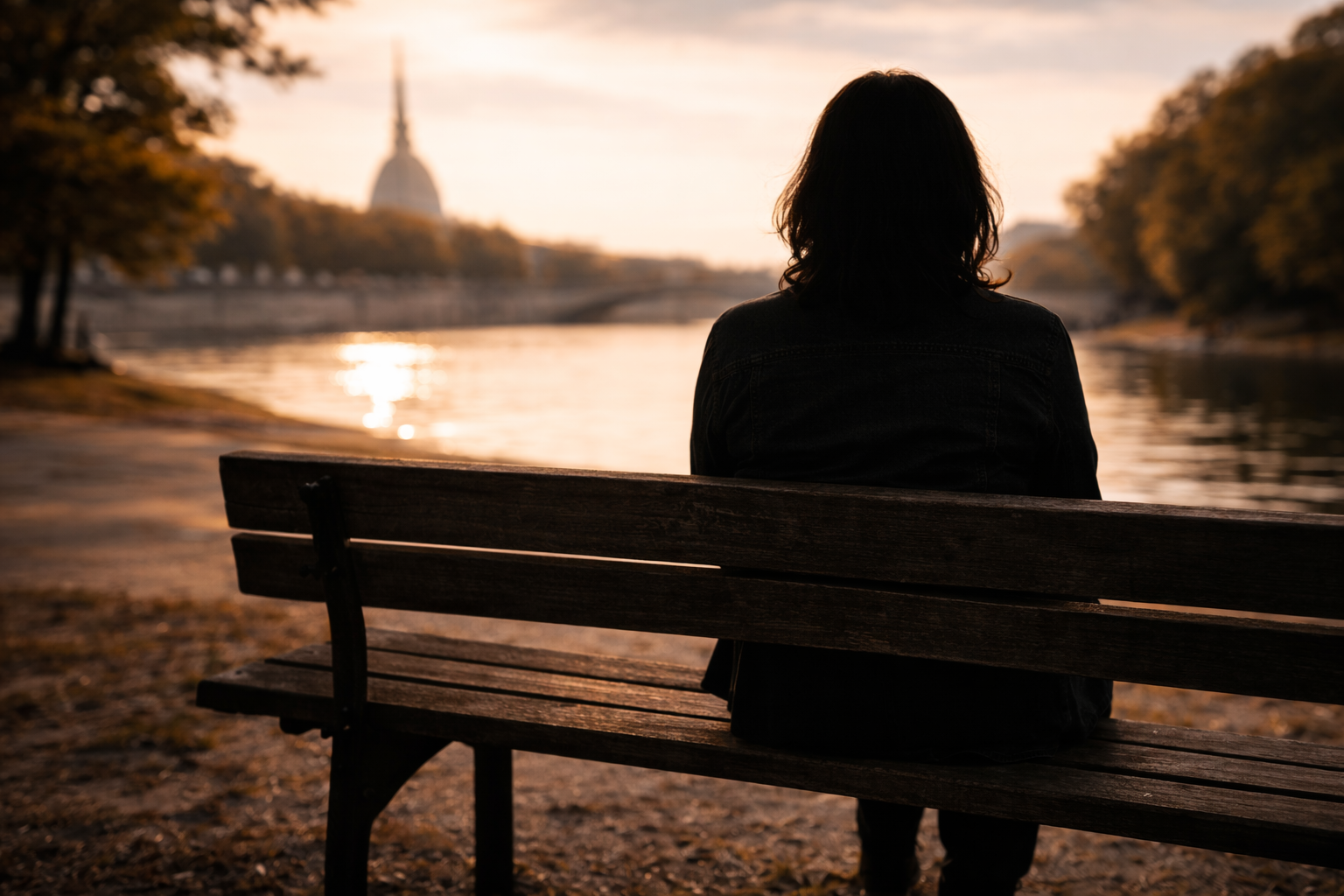
Heading image: AI-generated image (created with ChatGPT image generator, 2026).