
Female Household Servants in the Seventeenth-Century Town of Turku in South-West Finland
Between 1639 and 1700, the lower town court in Turku heard around 2,000 cases involving female household servants. During this period, at least 20,000 individuals worked as maids in the town, and these legal records offer a varied picture of their lives. The court cases reveal their everyday duties, rights, and obligations. This post examines those features and asks how the records reflect the views of maids and their employers on work, as well as the maids’ status and aspirations.
Laws governing servants
Italian diplomat Alessandro Bichi (1664-1725), travelling in the North, was shocked by women’s lives in seventeenth-century Sweden, of which Finland was then a part, and compared their situation to slavery. Daily life for female servants could involve hard labor, but it also included other dimensions. They formed relationships with fellow servants, masters, neighbors, and potential spouses. Service was not simply a personal relationship with a master as we might understand it today; it was shaped by a person’s background, social status, and sex within a hierarchical society.
In the seventeenth century, Turku was one of the largest towns in the Swedish realm, alongside Stockholm, Riga, and Gothenburg. It was also large by Northern and Central European standards. During the 17th century, the average population of a typical European regional town ranged between 1,000 and 5,000 residents. As Finland’s leading trading town, in the middle of the century it accounted for 40% of all trade in Finnish towns. The population was about 3,500 at the beginning of the century, around 5,000 in the middle, and roughly 7,000 by the end. By contrast, most towns in the Swedish kingdom had only a few hundred inhabitants.
To understand the lives and choices of female domestic servants, we must re-examine the laws, regulations, and religious norms that shaped them. In 1628, the Swedish priest Olaus Erici compared the members of a household to the heavens: the husband as the sun, the wife as the moon, and the children and servants as the stars. Even in the master’s absence, servants were expected to remain loyal and protect his property. This image made the household hierarchy clear and left no room for challenge. In the Swedish realm, women’s right to work was not disputed as long as it served the interests of their family or master.
From the late sixteenth century onward, the position of servants was defined by orthodox Lutheranism. Church and crown formed a theocracy that reinforced this order, and the household was likened to a kingdom in which the master ruled and the other members were his subjects. Subjects were expected to be loyal, but they could also expect protection from those in authority. Everyday tasks kept women mainly within the home, although they also left it to sell goods and assist other women in their work. Through these activities, they formed ties beyond their own household, especially within the neighborhood.
In the early twelfth century, some servants may have been freed slaves, since service in Sweden had originally been associated with slavery until the early Middle Ages. In the towns of the Swedish realm, urban life was governed by the medieval Town Law of King Magnus Eriksson, issued around 1350. This law already contained provisions on service. The Act also granted rights to servants. Over the following centuries, additional statutes on labor and vagrancy were introduced, but Sweden did not adopt a general law for the whole realm, including the towns, until 1734.
In 1664, the Swedish realm issued its first regulation specifically concerning servants. In effect, it imposed compulsory service on people who owned no land and did not practice a legally recognized trade, requiring them to enter the service of a taxpayer. As in many parts of Europe, this mainly affected unmarried young people between the ages of fifteen and thirty, who typically worked as general servants. At the same time, labor was scarce, and employers competed to secure workers for their own households. A new regulation issued in 1686 set limits on the number of servants a household could keep and regulated their wages. Its stated aim was to make servants available at reasonable cost to those who needed them.
Working and coping
Female household servants formed the largest group of women in Turku engaged in temporary work. Service in the Swedish Kingdom usually lasted from St Michael’s Day in September to the next. In the Nordic countries, production was generally carried out by families with the help of their servants. Even in England, women in the household often acted as partners in their master’s business. At the same time, their labor was understood as part of the master’s work. Unlike in England, however, wives and even unmarried women in Sweden, including domestic servants, could write bills, enter contracts, sue and be sued, collect debts, and provide collateral, although some of these acts required the permission of a husband or guardian.
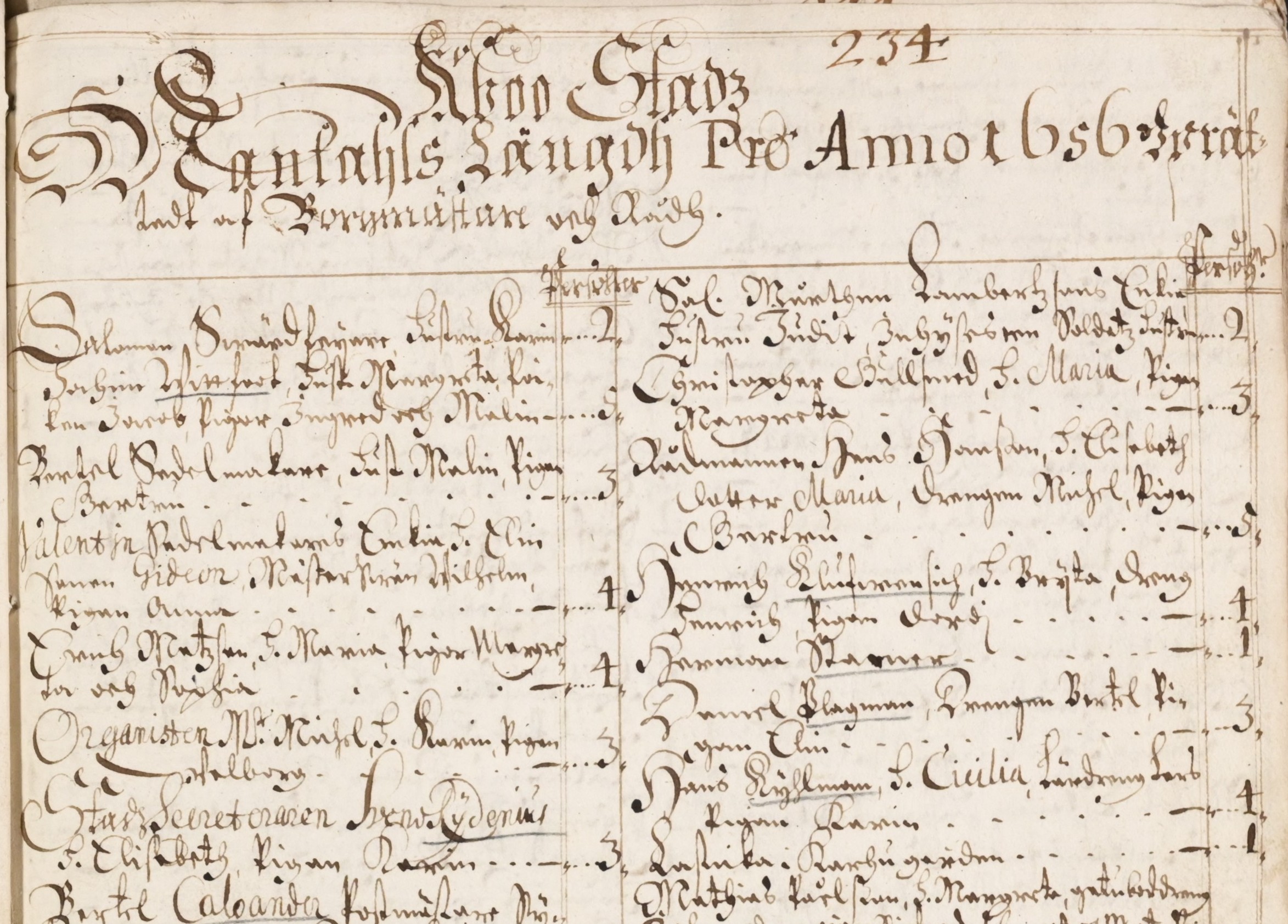
Before the 1650s, the number of female domestic servants cannot be determined, because the tax rolls record only the total number of people in each household. From 1656 onward, however, about half of all households had a female domestic servant. Merchant families, who formed the town’s leading elite, could employ as many as three to five, whereas households with male servants usually had only one, and most households had no male servants.
Servants were paid workers who lived in their employer’s household and received wages as well as board and lodging. During their term of service, they became part of the household and were formally regarded as comparable to the children, though probably not in practice, because maids were, for example, often accused in court of damaging or misappropriating property belonging to the household they served, unlike the family’s own children. When a maid sought a place in service, her future master paid her an engagement fee. The amount depended on the annual balance between the supply of servants and the demand for labor. In addition to this fee, she was promised wages that varied from case to case.
In Turku, service could last a year, half a year, or only a few months, depending on the needs of burghers engaged in trade, shipping, and farm work. Masters had no legal right to dismiss servants before the agreed term ended. If they did so because a servant was no longer needed, the court could require them to pay her full wages. If a mistress and a servant could not reach an agreement concerning continued service or working conditions, the service relationship could be ended. In such cases, the servant was required to find a replacement. For example, after serving for a year and a half in a burgher’s household, Brita Mattsdaughter left and later returned with a witness and another servant, Sofia Mattsdaughter, who was accepted in her place.
In the seventeenth century, working time was not separated from free time as clearly as it is today. In principle, servants were always on duty, although the intensity of their work varied by season and time of day. The labor of female domestic servants had both use value, in maintaining the household through childcare and other domestic tasks, and exchange value, in producing goods for sale. They worked mainly alongside their mistresses or under their direction. Their everyday duties included cooking, cleaning, laundry, childcare, heating the sauna, and taking cattle out to pasture in the morning and bringing them home in the evening.
Female domestic servants were sent to the marketplace to sell goods they had prepared with their mistresses, such as bread and other foodstuffs. They also worked as shop assistants in place of shop boys and were entrusted with handling the money kept in the shop. Tavern maids were often hired first as ordinary domestic servants, but many spent their term working in a tavern owned by their master or mistress. There they served customers and managed the cash and the purchase of drinks.
Despite occasional difficulties, servants maintained before the Magistrate’s Court that they wanted to carry out their duties properly and honorably. The maids regarded themselves as honourable people who acted in the interests of their employers and their own future. That is why they sought to clear themselves of allegations such as theft and charges of dereliction of duty. They also planned their futures actively, hoping to find service in other towns or to marry. Good relationships appear in court cases in which masters, mistresses, and female servants testified to one another’s honesty and respectability. Cooperation between a female domestic servant and her mistress could be close and enduring.
Court records provide a fairly comprehensive account of the maids’ lives and their own views. They reveal that households would not have prospered as they did without them. Maids constituted a significant part of the labour force in the city and were therefore essential to its economic growth. This is also demonstrated by the fact that disputes between maids and their employers were rare compared to the number of maids employed each year. For most, being a maid was a temporary phase in their lives, after which they would marry and set up their own households.
About the Author

Veli Pekka Toropainen is a doctoral researcher at the Faculty of Law of the University of Turku. He also holds a Doctorate in Philosophy with a focus on Finnish history. He is specialised in the history of Turku in the 17th century. In 2024, he was awarded the Knight’s Cross of the Order of the Lion of Finland for his achievements in the field of history and genealogy. Title of his thesis: Changes in the Judicial System in the Swedish Empire in the 17th Century and its Impact on the Local Community of Turku, ca. 1610 and 1710.
Publication: Veli Pekka Toropainen, “Female Household Servants in the Seventeenth-Century Town of Turku in South-West Finland,” in Short-term Labour and Precarious Work in Northern Europe, c. 1620–1870, eds. Ella Viitaniemi and Sofia Gustafsson, Labour in History and Society (Palgrave Macmillan, 2026), pp. 103–136. Published online 29 May 2026. Springer Nature Link
Picture: The 1656 census is the first to mention maidservants separately. In Turku’s Church Quarter, there were maidservants in nearly every household. National Archives, 7263, Census 1656. Photo: Veli Pekka Toropainen, 2026.