Visiting Sápmi: The Alta Dispute Through Archives
The Sámi Archive in Guovdageaidnu (Kautokeino) is responsible for preserving Sámi history as part of the National Archives of Norway. Guovdageaidnu is a central place in the history of Sámi mobilization, ever since the Sámi uprising in 1852. As part of my research, I travelled to Guovdageaidnu to search for archival materials related to another protest event, the Alta dispute, and to visit the land that is highly relevant to Sámi history and the Sámi present.
The Alta dispute – turning point in Nordic colonialism?
The Alta dispute is often framed as a turning point in the development of Sámi rights and state–Sámi relations in Nordic countries. In the early 1970s, the Norwegian state planned to build a hydropower plant and dam the Alta-Guovdageaidnu River in order to increase power production in Finnmark. Hydropower had been an important factor in post-war economic growth and in building the welfare states in Finland, Sweden and Norway. Some years earlier, the Lokka and Porttipahta artificial lakes had drowned vast areas on the Finnish side of Sápmi and forced their inhabitants to move, with devastating consequences for the local Sámi community (Kauhanen 2024). The Alta dam was planned in an area where the Sámi population formed the vast majority, and it threatened Sámi culture and livelihoods. Although the official assimilation policy had ended in Norway in the 1950s, colonial practices remained. However, this time, the construction plan faced significant and historic resistance (see Hjorthol 2006).
The protest started in the Sámi village of Máze, spread across Finnmark, and eventually throughout Norway – but was also highly contested (Andersen & Midttun 1985; Hjorthol 2006). As environmental questions were central to the widespread protest movement in order to gain as wide support as possible, by the end of the decade, the Alta dispute had become a symbol of the status of the Sámi people, which needed urgent evaluation and improvement (Hjorthol 2006). The dispute gained significant international attention, which was generated especially by the spontaneous grass-roots Sámi movement, whose members called themselves Samisk aksjonsgruppe or Samebevegelse (Somby 2024).
My research examines this movement and its use of international human rights fora during the last phases of the protest cycle in 1981. I focus especially on two cases: a pioneering application to the European Commission of Human Rights in Strasbourg, and a Sámi women’s tour to the Vatican, New York and Ottawa. I am interested in how and why international mobilization took place, what discussions surrounded these cases, and how international awareness and pressure challenged Nordic national reputations. Additionally, I analyze the role of gender in these processes. Through these cases, I aim to understand the evolving social and legal conceptualizations of indigeneity sparked by the Alta dispute. I had spent hours and hours online in archival portals to identify existing archival folders that might contain relevant material regarding the cases, and now I was really hoping that there would be some traces of these events.
The Alta dispute’s international aspects archived
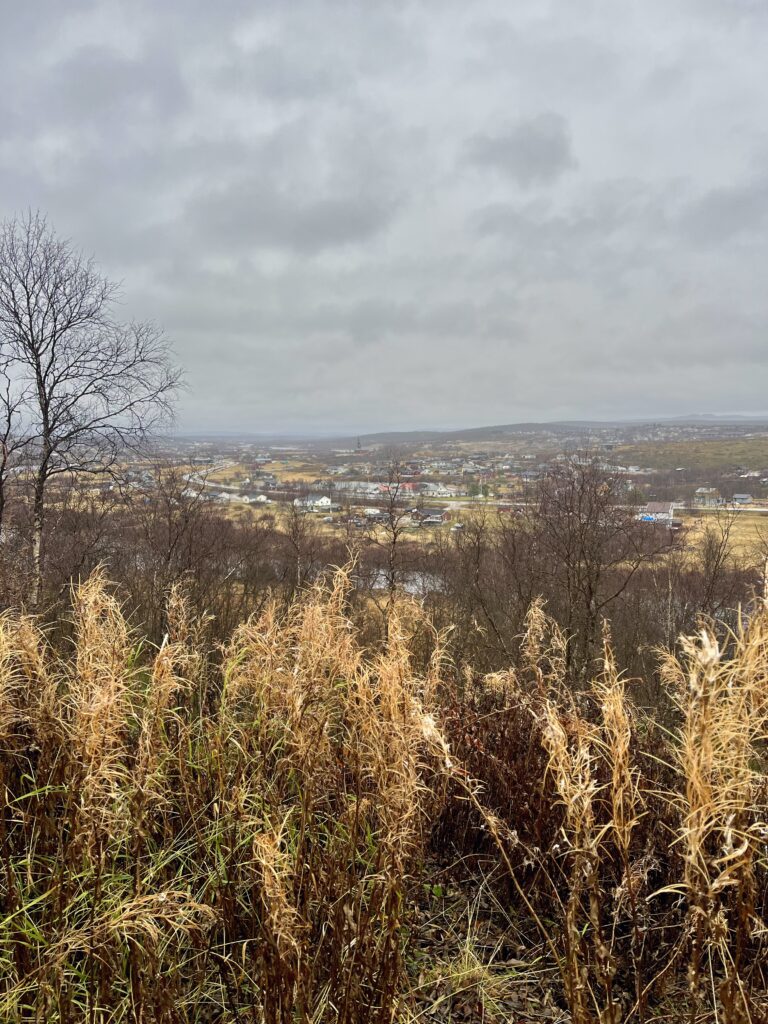
The cold stung my cheeks as I walked in a beige autumn landscape in Guovdageaidnu. I was heading towards an important hub of Sámi society, Diehtosiida, excited to visit the Sámi Archive. Once I arrived, my face, frozen by the cold, immediately warmed up with embarrassment related to my awkwardly limited Northern Sámi skills, as I stumbled over the most basic phrases with the personnel. Guovdageaidnu is a Sámi municipality and village with many Sámi cultural institutions and a vast majority of Northern Sámi speakers. The window of the archive opens onto a landscape: the river, the land and the communities that were affected by the Alta dispute. I understood the view as being both materially and symbolically connected to the ethical obligations for a researcher conducting work with indigenous issues, in my case, Sámi and Nordic history. I am a visitor, and I shall conduct the work in contact with the communities.
Thanks to the helpful staff of the archive and their willingness to answer my questions and requests for materials, I leafed through hundreds or thousands of sheets of paper and newspaper clippings. I had spent hours and hours online in an archival database with no clear knowledge of what the archived documents would contain. Luckily, the folders contained extremely relevant material. For example, as the folder of international correspondence shows, the Sámi movement behind the Strasbourg application explicitly identified the Nordic countries’ sensitivity to international pressure and used it strategically in order to pursue Sámi rights. However, I also experienced tough archival luck. On my final day of work, I requested a folder that included a subsection called Strasbourg. I had had delusional hopes of finding the original application of the pioneering Sámi case in this archive, since the files are subject to a 75-year access restriction in the European Court of Human Rights’ archives. I carefully opened the cardboard box and slid a bundle of documents out, which indeed turned out to concern the Alta case in question – only to find the Commission’s decision, which is also available online. Unfortunately, there was neither an application nor any drafts of it. The search continues elsewhere.
The Alta protests’ legacy and persisting violations of rights
Although the Alta dam was eventually built and put into operation in 1987 and the Strasbourg application was declared inadmissible in 1983, the protests led to significant political and legal reforms regarding Sámi issues in Finland, Sweden and Norway, including the establishment of the Sámi parliaments, constitutional changes, remarkable language acts and the development of international conventions on indigenous rights (Minde 2003). However, the development has not been linear and the realization of rights has its problems. Violations of Sámi rights by Nordic countries continue to occur, especially in relation to the green transition or militarization. The resistance continues (Laframboise 2024; Junka-Aikio 2025). In addition, despite the increased awareness of Sámi questions and history during the Alta dispute, the recent transitional justice processes have identified the structural lack of knowledge concerning the Sámi people in the Nordics (TRC in Finland, Sweden, Norway). My project derives from this framework and, from a historical perspective, aims to understand the dynamics between indigenous mobilization, Nordic national identities, awareness-building and socio-legal developments.
About the Author

Valpuri Alanen is a doctoral researcher at the Faculty of Law at the University of Turku and part of the team of the From the Margin to the Centre: Rights Development, Transitional Justice and Indigeneity in the Nordics (MARCEN) project. Her multidisciplinary work focuses on indigenous rights, mobilization, history, nationalism, gender, memory and visuality.
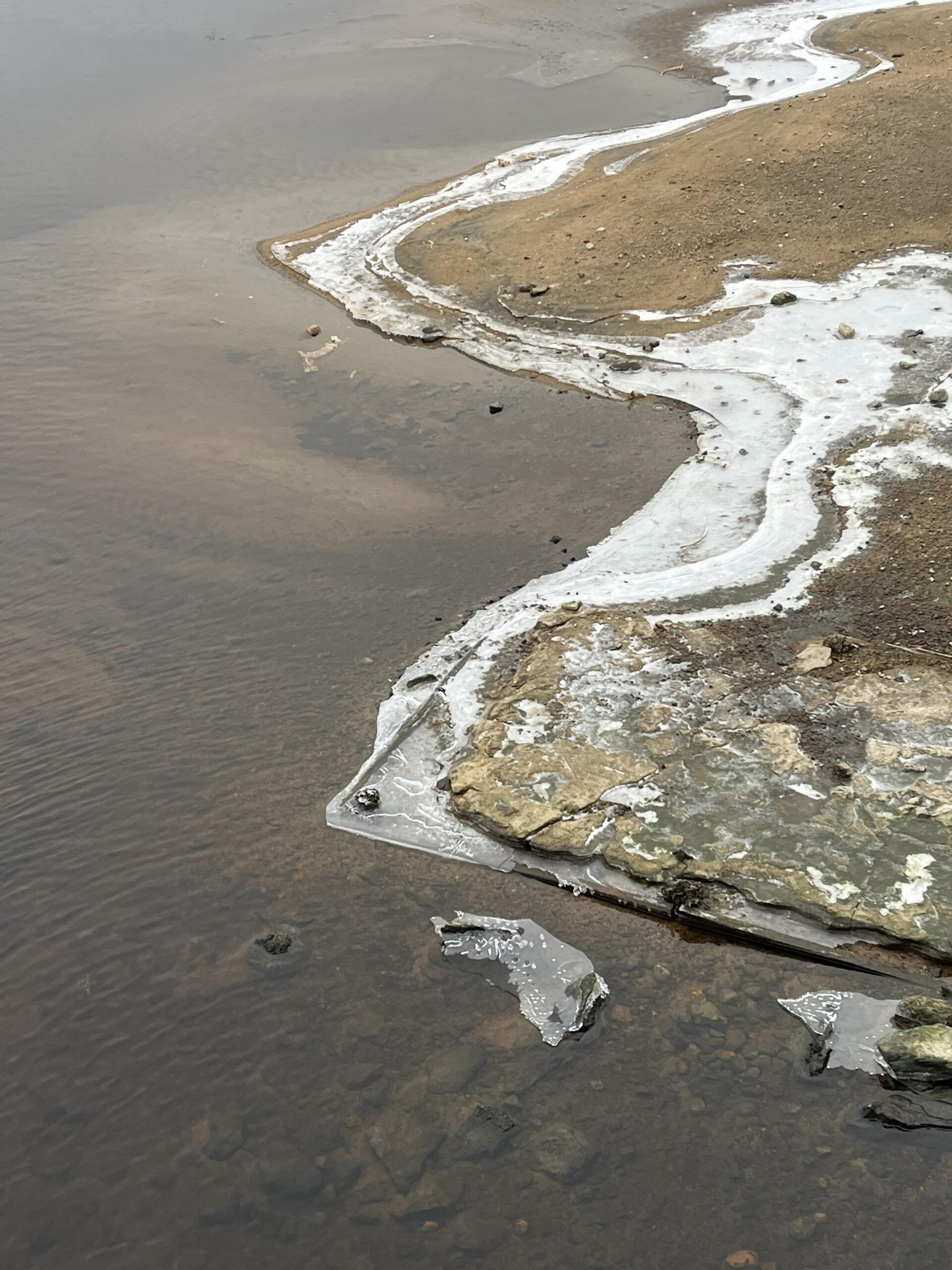
Photos of the Guovdageaidnu River by Valpuri Alanen.